
30X LED TOOL MAKER MEASUREMENT MICROSCOPE by View Solutions Inc.(formerly BoliOptics)

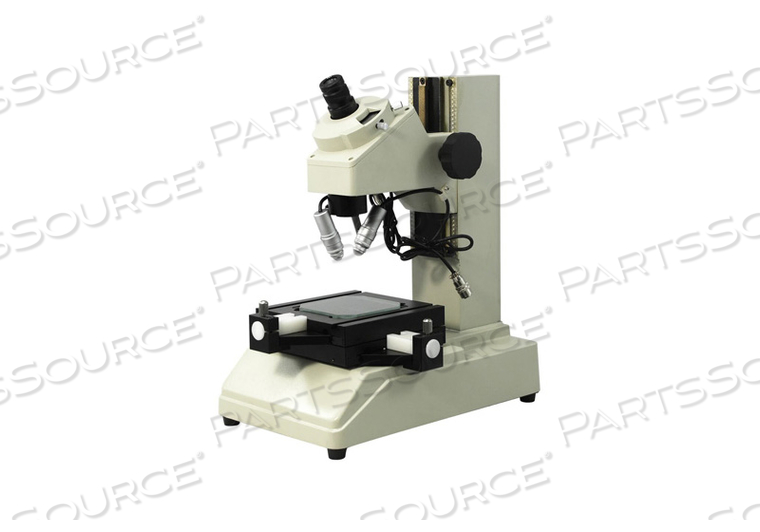
OEM#: MS2401010130X LED TOOL MAKER MEASUREMENT MICROSCOPE by View Solutions Inc.(formerly BoliOptics)
5/1 Years
Measurement under the microscope is a kind of non-contact measurement, that is, the measurement tool uses the points, lines, circles, angles, areas, three-dimensional of the image and the complex geometric images of the measured object to measure and calculate without contacting the specimen. For measurements, different optical systems and different measurement methods can be used, from the simplest measurement with scales to tools such as optical measurement platforms, as well as relevant measurement software etc. Measurement microscope is the general term for microscopes with this type of function. Non-contact measurement can measure the data of some small and irregular objects that are not accessible by conventional measuring tools. Especially after amplication of the microscope, its measurement accuracy can be very high, and the error caused by the optical system is small or even negligible.
Basic Hardware Requirements of the Measuring Microscope:
Light Source Requirements:
The light source for microscopic measurement should be uniform on the image plane of the field of view, and the bottom light should preferably use parallel light to make the outline and feature points clear. In theory, for microscopic measurement, it is best to use monochromatic light to reduce the effect of chromatic aberration, and therefore red light with the longest wavelength in the visible light is often used in measurement.
Platform Requirements:
Using optical measurement platform, it is possible to measure some large objects that exceed the microscope's field of view, and can achieve an accuracy of micron or even much smaller. The platform requires that the table plane should be of sound flatness, and maintains stable and leveling during movement. Moreover, the platform needs to have good rigidity, is not deformed or displaced itself, ensuring repeated measurement accuracy.
Other Simple Measurement Methods:
With the simple mechanism on the microscope, simple measurements and calculations can be performed on some observed objects that are not easy to use contact measurement. In addition to eyepiece reticle and objective micrometer measurement that we are familiar with, there are also other simple methods: for example, using the scale on the microscope stage, its accuracy can reach 0.1mm, which can measure the length of the measured object and roughly calculate its area; Using fine-tuning hand wheel mechanism of the microscope, calculate the height of the object to be observed by converting the fine-tuning number of revolutions into focusing stroke; using the rotating stage and the goniometer eyepiece, measure the angle etc.
System Optical Magnification
The magnification of the objective lens refers to the lateral magnification, it is the ratio of the image to the real size after the original image is magnified by the instrument. This multiple refers to the length or width of the magnified object.
System optical magnification is the product of the eyepiece and the objective lens (objective lens zoom set) of the optical imaging part within the system.
Optical magnification = eyepiece multiple X objective lens/objective lens set.
Total Magnifcation
Total magnification is the magnification of the observed object finally obtained by the instrument. This magnification is often the product of the optical magnification and the electronic magnification.
When it is only optically magnified, the total magnification will be the optical magnification.
Total magnification = optical magnification X electronic magnification.
Total magnification = (objective X photo eyepiece) X (display size / camera sensor target )
Eye Tube Diopter Adjustable
For most people, their two eyes, the left and the right, have different vision; for the eyepiece tube, the eyepoint height of the eyepiece can be adjusted to compensate for the difference in vision between the two eyes, so that the imaging in the two eyes is clear and consistent.
The range of adjustment of the eyepiece tube is generally diopter plus or minus 5 degrees, and the maximum differential value between the two eyepieces can reach 10 degrees.
Monocular adjustable and binocular adjustable: some microscopes have one eyepiece tube adjustable, and some have two eyepiece tubes adjustable. First, adjust one eyepiece tube to the 0 degree position, adjust the microscope focusing knob, and find the clear image of this eyepiece (when the monocular adjustable is used, first adjust the focusing knob to make this eyepiece image clear), then adjust the image of another eyepiece tube (do not adjust the focusing knob again at this time), repeatedly adjust to find the clear position, then the two images are clear at the same time. For this particular user, do not adjust this device anymore in the future.
As some microscopes do not have the vision adjustment mechanism for the eyepiece tube, the vision of the two eyes are adjusted through the eyepiece adjustable.
Eyepiece Optical Magnification
Eyepiece optical magnification is the visual magnification of the virtual image after initial imaging through the eyepiece. When the human eye observes through the eyepiece, the ratio of the tangent of the angle of view of the image and the tangent of the angle of view of the human eye when viewing or observing the object directly at the reference viewing distance is usually calculated according to 250 mm/focal length of eyepiece.
The standard configuration of a general microscope is a 10X eyepiece.
Usually, the magnification of the eyepiece of compound microscope is 5X, 8X, 10X, 12.5X, 16X, 20X.
As stereo microscope has a low total magnification, its eyepiece magnification generally does not use 5X, but can achieve 25X, 30X and other much bigger magnification.
Eyepiece Field of View
The eyepiece field of view is the diameter of the field diaphragm of the eyepiece, or the diameter of the image plane of the field diaphragm imaged by the field diaphragm.
The diameter of a large field of view can increase the viewing range, and see more detail in the field of view. However, if the field of view is too large, the spherical aberration and distortion around the eyepiece will increase, and the stray light around the field of view will affect the imaging effect.
Objective Optical Magnification
The finite objective is the lateral magnification of the primary image formed by the objective at a prescribed distance.
Infinite objective is the lateral magnification of the real image produced by the combination of the objective and the tube lens.
Infinite objective magnification = tube lens focal length (mm) / objective focal length (mm)
Lateral magnification of the image, that is, the ratio of the size of the image to the size of the object.
The larger the magnification of the objective, the higher the resolution, the smaller the corresponding field of view, and the shorter the working distance.
Objective Working Distance
The objective working distance is the vertical distance from the foremost surface end of the objective of the microscope to the object surface to be observed.
Generally, the greater the magnification, the higher the resolution of the objective, and the smaller the working distance, the smaller the field of view. Conversely, the smaller the magnification, the lower the resolution of the objective, and the greater the working distance, and greater the field of view.
High-magnification objectives (such as 80X and 100X objectives) have a very short working distance. Be very careful when focusing for observation. Generally, it is after the objective is in position, the axial limit protection is locked, then the objective is moved away from the direction of the observed object.
The relatively greater working distance leaves a relatively large space between the objective and the object to be observed. It is suitable for under microscope operation, and it is also easier to use more illumination methods. The defect is that it may reduce the numerical aperture of the objective, thereby reducing the resolution.
Objective Screw Thread
For microscopes of different manufacturers and different models, the thread size of their objectives may also be different.
In general, the objective threads are available in two standard sizes, allowing similar objectives between different manufacturers to be used interchangeably.
One is the British system: RMS type objective thread: 4/5in X 1/36in,
One is metric: M25 X 0.75mm thread.
Measurement under the microscope is a kind of non-contact measurement, that is, the measurement tool uses the points, lines, circles, angles, areas, three-dimensional of the image and the complex geometric images of the measured object to measure and calculate without contacting the specimen. For measurements, different optical systems and different measurement methods can be used, from the simplest measurement with scales to tools such as optical measurement platforms, as well as relevant measurement software etc. Measurement microscope is the general term for microscopes with this type of function. Non-contact measurement can measure the data of some small and irregular objects that are not accessible by conventional measuring tools. Especially after amplication of the microscope, its measurement accuracy can be very high, and the error caused by the optical system is small or even negligible.
Basic Hardware Requirements of the Measuring Microscope:
Light Source Requirements:
The light source for microscopic measurement should be uniform on the image plane of the field of view, and the bottom light should preferably use parallel light to make the outline and feature points clear. In theory, for microscopic measurement, it is best to use monochromatic light to reduce the effect of chromatic aberration, and therefore red light with the longest wavelength in the visible light is often used in measurement.
Platform Requirements:
Using optical measurement platform, it is possible to measure some large objects that exceed the microscope's field of view, and can achieve an accuracy of micron or even much smaller. The platform requires that the table plane should be of sound flatness, and maintains stable and leveling during movement. Moreover, the platform needs to have good rigidity, is not deformed or displaced itself, ensuring repeated measurement accuracy.
Other Simple Measurement Methods:
With the simple mechanism on the microscope, simple measurements and calculations can be performed on some observed objects that are not easy to use contact measurement. In addition to eyepiece reticle and objective micrometer measurement that we are familiar with, there are also other simple methods: for example, using the scale on the microscope stage, its accuracy can reach 0.1mm, which can measure the length of the measured object and roughly calculate its area; Using fine-tuning hand wheel mechanism of the microscope, calculate the height of the object to be observed by converting the fine-tuning number of revolutions into focusing stroke; using the rotating stage and the goniometer eyepiece, measure the angle etc.
System Optical Magnification
The magnification of the objective lens refers to the lateral magnification, it is the ratio of the image to the real size after the original image is magnified by the instrument. This multiple refers to the length or width of the magnified object.
System optical magnification is the product of the eyepiece and the objective lens (objective lens zoom set) of the optical imaging part within the system.
Optical magnification = eyepiece multiple X objective lens/objective lens set.
Total Magnifcation
Total magnification is the magnification of the observed object finally obtained by the instrument. This magnification is often the product of the optical magnification and the electronic magnification.
When it is only optically magnified, the total magnification will be the optical magnification.
Total magnification = optical magnification X electronic magnification.
Total magnification = (objective X photo eyepiece) X (display size / camera sensor target )
Eye Tube Diopter Adjustable
For most people, their two eyes, the left and the right, have different vision; for the eyepiece tube, the eyepoint height of the eyepiece can be adjusted to compensate for the difference in vision between the two eyes, so that the imaging in the two eyes is clear and consistent.
The range of adjustment of the eyepiece tube is generally diopter plus or minus 5 degrees, and the maximum differential value between the two eyepieces can reach 10 degrees.
Monocular adjustable and binocular adjustable: some microscopes have one eyepiece tube adjustable, and some have two eyepiece tubes adjustable. First, adjust one eyepiece tube to the 0 degree position, adjust the microscope focusing knob, and find the clear image of this eyepiece (when the monocular adjustable is used, first adjust the focusing knob to make this eyepiece image clear), then adjust the image of another eyepiece tube (do not adjust the focusing knob again at this time), repeatedly adjust to find the clear position, then the two images are clear at the same time. For this particular user, do not adjust this device anymore in the future.
As some microscopes do not have the vision adjustment mechanism for the eyepiece tube, the vision of the two eyes are adjusted through the eyepiece adjustable.
Eyepiece Optical Magnification
Eyepiece optical magnification is the visual magnification of the virtual image after initial imaging through the eyepiece. When the human eye observes through the eyepiece, the ratio of the tangent of the angle of view of the image and the tangent of the angle of view of the human eye when viewing or observing the object directly at the reference viewing distance is usually calculated according to 250 mm/focal length of eyepiece.
The standard configuration of a general microscope is a 10X eyepiece.
Usually, the magnification of the eyepiece of compound microscope is 5X, 8X, 10X, 12.5X, 16X, 20X.
As stereo microscope has a low total magnification, its eyepiece magnification generally does not use 5X, but can achieve 25X, 30X and other much bigger magnification.
Eyepiece Field of View
The eyepiece field of view is the diameter of the field diaphragm of the eyepiece, or the diameter of the image plane of the field diaphragm imaged by the field diaphragm.
The diameter of a large field of view can increase the viewing range, and see more detail in the field of view. However, if the field of view is too large, the spherical aberration and distortion around the eyepiece will increase, and the stray light around the field of view will affect the imaging effect.
Objective Optical Magnification
The finite objective is the lateral magnification of the primary image formed by the objective at a prescribed distance.
Infinite objective is the lateral magnification of the real image produced by the combination of the objective and the tube lens.
Infinite objective magnification = tube lens focal length (mm) / objective focal length (mm)
Lateral magnification of the image, that is, the ratio of the size of the image to the size of the object.
The larger the magnification of the objective, the higher the resolution, the smaller the corresponding field of view, and the shorter the working distance.
Objective Working Distance
The objective working distance is the vertical distance from the foremost surface end of the objective of the microscope to the object surface to be observed.
Generally, the greater the magnification, the higher the resolution of the objective, and the smaller the working distance, the smaller the field of view. Conversely, the smaller the magnification, the lower the resolution of the objective, and the greater the working distance, and greater the field of view.
High-magnification objectives (such as 80X and 100X objectives) have a very short working distance. Be very careful when focusing for observation. Generally, it is after the objective is in position, the axial limit protection is locked, then the objective is moved away from the direction of the observed object.
The relatively greater working distance leaves a relatively large space between the objective and the object to be observed. It is suitable for under microscope operation, and it is also easier to use more illumination methods. The defect is that it may reduce the numerical aperture of the objective, thereby reducing the resolution.
Objective Screw Thread
For microscopes of different manufacturers and different models, the thread size of their objectives may also be different.
In general, the objective threads are available in two standard sizes, allowing similar objectives between different manufacturers to be used interchangeably.
One is the British system: RMS type objective thread: 4/5in X 1/36in,
One is metric: M25 X 0.75mm thread.
Measurement under the microscope is a kind of non-contact measurement, that is, the measurement tool uses the points, lines, circles, angles, areas, three-dimensional of the image and the complex geometric images of the measured object to measure and calculate without contacting the specimen. For measurements, different optical systems and different measurement methods can be used, from the simplest measurement with scales to tools such as optical measurement platforms, as well as relevant measurement software etc. Measurement microscope is the general term for microscopes with this type of function. Non-contact measurement can measure the data of some small and irregular objects that are not accessible by conventional measuring tools. Especially after amplication of the microscope, its measurement accuracy can be very high, and the error caused by the optical system is small or even negligible.
Basic Hardware Requirements of the Measuring Microscope:
Light Source Requirements:
The light source for microscopic measurement should be uniform on the image plane of the field of view, and the bottom light should preferably use parallel light to make the outline and feature points clear. In theory, for microscopic measurement, it is best to use monochromatic light to reduce the effect of chromatic aberration, and therefore red light with the longest wavelength in the visible light is often used in measurement.
Platform Requirements:
Using optical measurement platform, it is possible to measure some large objects that exceed the microscope's field of view, and can achieve an accuracy of micron or even much smaller. The platform requires that the table plane should be of sound flatness, and maintains stable and leveling during movement. Moreover, the platform needs to have good rigidity, is not deformed or displaced itself, ensuring repeated measurement accuracy.
Other Simple Measurement Methods:
With the simple mechanism on the microscope, simple measurements and calculations can be performed on some observed objects that are not easy to use contact measurement. In addition to eyepiece reticle and objective micrometer measurement that we are familiar with, there are also other simple methods: for example, using the scale on the microscope stage, its accuracy can reach 0.1mm, which can measure the length of the measured object and roughly calculate its area; Using fine-tuning hand wheel mechanism of the microscope, calculate the height of the object to be observed by converting the fine-tuning number of revolutions into focusing stroke; using the rotating stage and the goniometer eyepiece, measure the angle etc.
System Optical Magnification
The magnification of the objective lens refers to the lateral magnification, it is the ratio of the image to the real size after the original image is magnified by the instrument. This multiple refers to the length or width of the magnified object.
System optical magnification is the product of the eyepiece and the objective lens (objective lens zoom set) of the optical imaging part within the system.
Optical magnification = eyepiece multiple X objective lens/objective lens set.
Total Magnifcation
Total magnification is the magnification of the observed object finally obtained by the instrument. This magnification is often the product of the optical magnification and the electronic magnification.
When it is only optically magnified, the total magnification will be the optical magnification.
Total magnification = optical magnification X electronic magnification.
Total magnification = (objective X photo eyepiece) X (display size / camera sensor target )
Eye Tube Diopter Adjustable
For most people, their two eyes, the left and the right, have different vision; for the eyepiece tube, the eyepoint height of the eyepiece can be adjusted to compensate for the difference in vision between the two eyes, so that the imaging in the two eyes is clear and consistent.
The range of adjustment of the eyepiece tube is generally diopter plus or minus 5 degrees, and the maximum differential value between the two eyepieces can reach 10 degrees.
Monocular adjustable and binocular adjustable: some microscopes have one eyepiece tube adjustable, and some have two eyepiece tubes adjustable. First, adjust one eyepiece tube to the 0 degree position, adjust the microscope focusing knob, and find the clear image of this eyepiece (when the monocular adjustable is used, first adjust the focusing knob to make this eyepiece image clear), then adjust the image of another eyepiece tube (do not adjust the focusing knob again at this time), repeatedly adjust to find the clear position, then the two images are clear at the same time. For this particular user, do not adjust this device anymore in the future.
As some microscopes do not have the vision adjustment mechanism for the eyepiece tube, the vision of the two eyes are adjusted through the eyepiece adjustable.
Eyepiece Optical Magnification
Eyepiece optical magnification is the visual magnification of the virtual image after initial imaging through the eyepiece. When the human eye observes through the eyepiece, the ratio of the tangent of the angle of view of the image and the tangent of the angle of view of the human eye when viewing or observing the object directly at the reference viewing distance is usually calculated according to 250 mm/focal length of eyepiece.
The standard configuration of a general microscope is a 10X eyepiece.
Usually, the magnification of the eyepiece of compound microscope is 5X, 8X, 10X, 12.5X, 16X, 20X.
As stereo microscope has a low total magnification, its eyepiece magnification generally does not use 5X, but can achieve 25X, 30X and other much bigger magnification.
Eyepiece Field of View
The eyepiece field of view is the diameter of the field diaphragm of the eyepiece, or the diameter of the image plane of the field diaphragm imaged by the field diaphragm.
The diameter of a large field of view can increase the viewing range, and see more detail in the field of view. However, if the field of view is too large, the spherical aberration and distortion around the eyepiece will increase, and the stray light around the field of view will affect the imaging effect.
Objective Optical Magnification
The finite objective is the lateral magnification of the primary image formed by the objective at a prescribed distance.
Infinite objective is the lateral magnification of the real image produced by the combination of the objective and the tube lens.
Infinite objective magnification = tube lens focal length (mm) / objective focal length (mm)
Lateral magnification of the image, that is, the ratio of the size of the image to the size of the object.
The larger the magnification of the objective, the higher the resolution, the smaller the corresponding field of view, and the shorter the working distance.
Objective Working Distance
The objective working distance is the vertical distance from the foremost surface end of the objective of the microscope to the object surface to be observed.
Generally, the greater the magnification, the higher the resolution of the objective, and the smaller the working distance, the smaller the field of view. Conversely, the smaller the magnification, the lower the resolution of the objective, and the greater the working distance, and greater the field of view.
High-magnification objectives (such as 80X and 100X objectives) have a very short working distance. Be very careful when focusing for observation. Generally, it is after the objective is in position, the axial limit protection is locked, then the objective is moved away from the direction of the observed object.
The relatively greater working distance leaves a relatively large space between the objective and the object to be observed. It is suitable for under microscope operation, and it is also easier to use more illumination methods. The defect is that it may reduce the numerical aperture of the objective, thereby reducing the resolution.
Objective Screw Thread
For microscopes of different manufacturers and different models, the thread size of their objectives may also be different.
In general, the objective threads are available in two standard sizes, allowing similar objectives between different manufacturers to be used interchangeably.
One is the British system: RMS type objective thread: 4/5in X 1/36in,
One is metric: M25 X 0.75mm thread.
Measurement under the microscope is a kind of non-contact measurement, that is, the measurement tool uses the points, lines, circles, angles, areas, three-dimensional of the image and the complex geometric images of the measured object to measure and calculate without contacting the specimen. For measurements, different optical systems and different measurement methods can be used, from the simplest measurement with scales to tools such as optical measurement platforms, as well as relevant measurement software etc. Measurement microscope is the general term for microscopes with this type of function. Non-contact measurement can measure the data of some small and irregular objects that are not accessible by conventional measuring tools. Especially after amplication of the microscope, its measurement accuracy can be very high, and the error caused by the optical system is small or even negligible.
Basic Hardware Requirements of the Measuring Microscope:
Light Source Requirements:
The light source for microscopic measurement should be uniform on the image plane of the field of view, and the bottom light should preferably use parallel light to make the outline and feature points clear. In theory, for microscopic measurement, it is best to use monochromatic light to reduce the effect of chromatic aberration, and therefore red light with the longest wavelength in the visible light is often used in measurement.
Platform Requirements:
Using optical measurement platform, it is possible to measure some large objects that exceed the microscope's field of view, and can achieve an accuracy of micron or even much smaller. The platform requires that the table plane should be of sound flatness, and maintains stable and leveling during movement. Moreover, the platform needs to have good rigidity, is not deformed or displaced itself, ensuring repeated measurement accuracy.
Other Simple Measurement Methods:
With the simple mechanism on the microscope, simple measurements and calculations can be performed on some observed objects that are not easy to use contact measurement. In addition to eyepiece reticle and objective micrometer measurement that we are familiar with, there are also other simple methods: for example, using the scale on the microscope stage, its accuracy can reach 0.1mm, which can measure the length of the measured object and roughly calculate its area; Using fine-tuning hand wheel mechanism of the microscope, calculate the height of the object to be observed by converting the fine-tuning number of revolutions into focusing stroke; using the rotating stage and the goniometer eyepiece, measure the angle etc.
System Optical Magnification
The magnification of the objective lens refers to the lateral magnification, it is the ratio of the image to the real size after the original image is magnified by the instrument. This multiple refers to the length or width of the magnified object.
System optical magnification is the product of the eyepiece and the objective lens (objective lens zoom set) of the optical imaging part within the system.
Optical magnification = eyepiece multiple X objective lens/objective lens set.
Total Magnifcation
Total magnification is the magnification of the observed object finally obtained by the instrument. This magnification is often the product of the optical magnification and the electronic magnification.
When it is only optically magnified, the total magnification will be the optical magnification.
Total magnification = optical magnification X electronic magnification.
Total magnification = (objective X photo eyepiece) X (display size / camera sensor target )
Eye Tube Diopter Adjustable
For most people, their two eyes, the left and the right, have different vision; for the eyepiece tube, the eyepoint height of the eyepiece can be adjusted to compensate for the difference in vision between the two eyes, so that the imaging in the two eyes is clear and consistent.
The range of adjustment of the eyepiece tube is generally diopter plus or minus 5 degrees, and the maximum differential value between the two eyepieces can reach 10 degrees.
Monocular adjustable and binocular adjustable: some microscopes have one eyepiece tube adjustable, and some have two eyepiece tubes adjustable. First, adjust one eyepiece tube to the 0 degree position, adjust the microscope focusing knob, and find the clear image of this eyepiece (when the monocular adjustable is used, first adjust the focusing knob to make this eyepiece image clear), then adjust the image of another eyepiece tube (do not adjust the focusing knob again at this time), repeatedly adjust to find the clear position, then the two images are clear at the same time. For this particular user, do not adjust this device anymore in the future.
As some microscopes do not have the vision adjustment mechanism for the eyepiece tube, the vision of the two eyes are adjusted through the eyepiece adjustable.
Eyepiece Optical Magnification
Eyepiece optical magnification is the visual magnification of the virtual image after initial imaging through the eyepiece. When the human eye observes through the eyepiece, the ratio of the tangent of the angle of view of the image and the tangent of the angle of view of the human eye when viewing or observing the object directly at the reference viewing distance is usually calculated according to 250 mm/focal length of eyepiece.
The standard configuration of a general microscope is a 10X eyepiece.
Usually, the magnification of the eyepiece of compound microscope is 5X, 8X, 10X, 12.5X, 16X, 20X.
As stereo microscope has a low total magnification, its eyepiece magnification generally does not use 5X, but can achieve 25X, 30X and other much bigger magnification.
Eyepiece Field of View
The eyepiece field of view is the diameter of the field diaphragm of the eyepiece, or the diameter of the image plane of the field diaphragm imaged by the field diaphragm.
The diameter of a large field of view can increase the viewing range, and see more detail in the field of view. However, if the field of view is too large, the spherical aberration and distortion around the eyepiece will increase, and the stray light around the field of view will affect the imaging effect.
Objective Optical Magnification
The finite objective is the lateral magnification of the primary image formed by the objective at a prescribed distance.
Infinite objective is the lateral magnification of the real image produced by the combination of the objective and the tube lens.
Infinite objective magnification = tube lens focal length (mm) / objective focal length (mm)
Lateral magnification of the image, that is, the ratio of the size of the image to the size of the object.
The larger the magnification of the objective, the higher the resolution, the smaller the corresponding field of view, and the shorter the working distance.
Objective Working Distance
The objective working distance is the vertical distance from the foremost surface end of the objective of the microscope to the object surface to be observed.
Generally, the greater the magnification, the higher the resolution of the objective, and the smaller the working distance, the smaller the field of view. Conversely, the smaller the magnification, the lower the resolution of the objective, and the greater the working distance, and greater the field of view.
High-magnification objectives (such as 80X and 100X objectives) have a very short working distance. Be very careful when focusing for observation. Generally, it is after the objective is in position, the axial limit protection is locked, then the objective is moved away from the direction of the observed object.
The relatively greater working distance leaves a relatively large space between the objective and the object to be observed. It is suitable for under microscope operation, and it is also easier to use more illumination methods. The defect is that it may reduce the numerical aperture of the objective, thereby reducing the resolution.
Objective Screw Thread
For microscopes of different manufacturers and different models, the thread size of their objectives may also be different.
In general, the objective threads are available in two standard sizes, allowing similar objectives between different manufacturers to be used interchangeably.
One is the British system: RMS type objective thread: 4/5in X 1/36in,
One is metric: M25 X 0.75mm thread.
Measurement under the microscope is a kind of non-contact measurement, that is, the measurement tool uses the points, lines, circles, angles, areas, three-dimensional of the image and the complex geometric images of the measured object to measure and calculate without contacting the specimen. For measurements, different optical systems and different measurement methods can be used, from the simplest measurement with scales to tools such as optical measurement platforms, as well as relevant measurement software etc. Measurement microscope is the general term for microscopes with this type of function. Non-contact measurement can measure the data of some small and irregular objects that are not accessible by conventional measuring tools. Especially after amplication of the microscope, its measurement accuracy can be very high, and the error caused by the optical system is small or even negligible.
Basic Hardware Requirements of the Measuring Microscope:
Light Source Requirements:
The light source for microscopic measurement should be uniform on the image plane of the field of view, and the bottom light should preferably use parallel light to make the outline and feature points clear. In theory, for microscopic measurement, it is best to use monochromatic light to reduce the effect of chromatic aberration, and therefore red light with the longest wavelength in the visible light is often used in measurement.
Platform Requirements:
Using optical measurement platform, it is possible to measure some large objects that exceed the microscope's field of view, and can achieve an accuracy of micron or even much smaller. The platform requires that the table plane should be of sound flatness, and maintains stable and leveling during movement. Moreover, the platform needs to have good rigidity, is not deformed or displaced itself, ensuring repeated measurement accuracy.
Other Simple Measurement Methods:
With the simple mechanism on the microscope, simple measurements and calculations can be performed on some observed objects that are not easy to use contact measurement. In addition to eyepiece reticle and objective micrometer measurement that we are familiar with, there are also other simple methods: for example, using the scale on the microscope stage, its accuracy can reach 0.1mm, which can measure the length of the measured object and roughly calculate its area; Using fine-tuning hand wheel mechanism of the microscope, calculate the height of the object to be observed by converting the fine-tuning number of revolutions into focusing stroke; using the rotating stage and the goniometer eyepiece, measure the angle etc.
System Optical Magnification
The magnification of the objective lens refers to the lateral magnification, it is the ratio of the image to the real size after the original image is magnified by the instrument. This multiple refers to the length or width of the magnified object.
System optical magnification is the product of the eyepiece and the objective lens (objective lens zoom set) of the optical imaging part within the system.
Optical magnification = eyepiece multiple X objective lens/objective lens set.
Total Magnifcation
Total magnification is the magnification of the observed object finally obtained by the instrument. This magnification is often the product of the optical magnification and the electronic magnification.
When it is only optically magnified, the total magnification will be the optical magnification.
Total magnification = optical magnification X electronic magnification.
Total magnification = (objective X photo eyepiece) X (display size / camera sensor target )
Eye Tube Diopter Adjustable
For most people, their two eyes, the left and the right, have different vision; for the eyepiece tube, the eyepoint height of the eyepiece can be adjusted to compensate for the difference in vision between the two eyes, so that the imaging in the two eyes is clear and consistent.
The range of adjustment of the eyepiece tube is generally diopter plus or minus 5 degrees, and the maximum differential value between the two eyepieces can reach 10 degrees.
Monocular adjustable and binocular adjustable: some microscopes have one eyepiece tube adjustable, and some have two eyepiece tubes adjustable. First, adjust one eyepiece tube to the 0 degree position, adjust the microscope focusing knob, and find the clear image of this eyepiece (when the monocular adjustable is used, first adjust the focusing knob to make this eyepiece image clear), then adjust the image of another eyepiece tube (do not adjust the focusing knob again at this time), repeatedly adjust to find the clear position, then the two images are clear at the same time. For this particular user, do not adjust this device anymore in the future.
As some microscopes do not have the vision adjustment mechanism for the eyepiece tube, the vision of the two eyes are adjusted through the eyepiece adjustable.
Eyepiece Optical Magnification
Eyepiece optical magnification is the visual magnification of the virtual image after initial imaging through the eyepiece. When the human eye observes through the eyepiece, the ratio of the tangent of the angle of view of the image and the tangent of the angle of view of the human eye when viewing or observing the object directly at the reference viewing distance is usually calculated according to 250 mm/focal length of eyepiece.
The standard configuration of a general microscope is a 10X eyepiece.
Usually, the magnification of the eyepiece of compound microscope is 5X, 8X, 10X, 12.5X, 16X, 20X.
As stereo microscope has a low total magnification, its eyepiece magnification generally does not use 5X, but can achieve 25X, 30X and other much bigger magnification.
Eyepiece Field of View
The eyepiece field of view is the diameter of the field diaphragm of the eyepiece, or the diameter of the image plane of the field diaphragm imaged by the field diaphragm.
The diameter of a large field of view can increase the viewing range, and see more detail in the field of view. However, if the field of view is too large, the spherical aberration and distortion around the eyepiece will increase, and the stray light around the field of view will affect the imaging effect.
Objective Optical Magnification
The finite objective is the lateral magnification of the primary image formed by the objective at a prescribed distance.
Infinite objective is the lateral magnification of the real image produced by the combination of the objective and the tube lens.
Infinite objective magnification = tube lens focal length (mm) / objective focal length (mm)
Lateral magnification of the image, that is, the ratio of the size of the image to the size of the object.
The larger the magnification of the objective, the higher the resolution, the smaller the corresponding field of view, and the shorter the working distance.
Objective Working Distance
The objective working distance is the vertical distance from the foremost surface end of the objective of the microscope to the object surface to be observed.
Generally, the greater the magnification, the higher the resolution of the objective, and the smaller the working distance, the smaller the field of view. Conversely, the smaller the magnification, the lower the resolution of the objective, and the greater the working distance, and greater the field of view.
High-magnification objectives (such as 80X and 100X objectives) have a very short working distance. Be very careful when focusing for observation. Generally, it is after the objective is in position, the axial limit protection is locked, then the objective is moved away from the direction of the observed object.
The relatively greater working distance leaves a relatively large space between the objective and the object to be observed. It is suitable for under microscope operation, and it is also easier to use more illumination methods. The defect is that it may reduce the numerical aperture of the objective, thereby reducing the resolution.
Objective Screw Thread
For microscopes of different manufacturers and different models, the thread size of their objectives may also be different.
In general, the objective threads are available in two standard sizes, allowing similar objectives between different manufacturers to be used interchangeably.
One is the British system: RMS type objective thread: 4/5in X 1/36in,
One is metric: M25 X 0.75mm thread.
Measurement under the microscope is a kind of non-contact measurement, that is, the measurement tool uses the points, lines, circles, angles, areas, three-dimensional of the image and the complex geometric images of the measured object to measure and calculate without contacting the specimen. For measurements, different optical systems and different measurement methods can be used, from the simplest measurement with scales to tools such as optical measurement platforms, as well as relevant measurement software etc. Measurement microscope is the general term for microscopes with this type of function. Non-contact measurement can measure the data of some small and irregular objects that are not accessible by conventional measuring tools. Especially after amplication of the microscope, its measurement accuracy can be very high, and the error caused by the optical system is small or even negligible.
Basic Hardware Requirements of the Measuring Microscope:
Light Source Requirements:
The light source for microscopic measurement should be uniform on the image plane of the field of view, and the bottom light should preferably use parallel light to make the outline and feature points clear. In theory, for microscopic measurement, it is best to use monochromatic light to reduce the effect of chromatic aberration, and therefore red light with the longest wavelength in the visible light is often used in measurement.
Platform Requirements:
Using optical measurement platform, it is possible to measure some large objects that exceed the microscope's field of view, and can achieve an accuracy of micron or even much smaller. The platform requires that the table plane should be of sound flatness, and maintains stable and leveling during movement. Moreover, the platform needs to have good rigidity, is not deformed or displaced itself, ensuring repeated measurement accuracy.
Other Simple Measurement Methods:
With the simple mechanism on the microscope, simple measurements and calculations can be performed on some observed objects that are not easy to use contact measurement. In addition to eyepiece reticle and objective micrometer measurement that we are familiar with, there are also other simple methods: for example, using the scale on the microscope stage, its accuracy can reach 0.1mm, which can measure the length of the measured object and roughly calculate its area; Using fine-tuning hand wheel mechanism of the microscope, calculate the height of the object to be observed by converting the fine-tuning number of revolutions into focusing stroke; using the rotating stage and the goniometer eyepiece, measure the angle etc.
System Optical Magnification
The magnification of the objective lens refers to the lateral magnification, it is the ratio of the image to the real size after the original image is magnified by the instrument. This multiple refers to the length or width of the magnified object.
System optical magnification is the product of the eyepiece and the objective lens (objective lens zoom set) of the optical imaging part within the system.
Optical magnification = eyepiece multiple X objective lens/objective lens set.
Total Magnifcation
Total magnification is the magnification of the observed object finally obtained by the instrument. This magnification is often the product of the optical magnification and the electronic magnification.
When it is only optically magnified, the total magnification will be the optical magnification.
Total magnification = optical magnification X electronic magnification.
Total magnification = (objective X photo eyepiece) X (display size / camera sensor target )
Eye Tube Diopter Adjustable
For most people, their two eyes, the left and the right, have different vision; for the eyepiece tube, the eyepoint height of the eyepiece can be adjusted to compensate for the difference in vision between the two eyes, so that the imaging in the two eyes is clear and consistent.
The range of adjustment of the eyepiece tube is generally diopter plus or minus 5 degrees, and the maximum differential value between the two eyepieces can reach 10 degrees.
Monocular adjustable and binocular adjustable: some microscopes have one eyepiece tube adjustable, and some have two eyepiece tubes adjustable. First, adjust one eyepiece tube to the 0 degree position, adjust the microscope focusing knob, and find the clear image of this eyepiece (when the monocular adjustable is used, first adjust the focusing knob to make this eyepiece image clear), then adjust the image of another eyepiece tube (do not adjust the focusing knob again at this time), repeatedly adjust to find the clear position, then the two images are clear at the same time. For this particular user, do not adjust this device anymore in the future.
As some microscopes do not have the vision adjustment mechanism for the eyepiece tube, the vision of the two eyes are adjusted through the eyepiece adjustable.
Eyepiece Optical Magnification
Eyepiece optical magnification is the visual magnification of the virtual image after initial imaging through the eyepiece. When the human eye observes through the eyepiece, the ratio of the tangent of the angle of view of the image and the tangent of the angle of view of the human eye when viewing or observing the object directly at the reference viewing distance is usually calculated according to 250 mm/focal length of eyepiece.
The standard configuration of a general microscope is a 10X eyepiece.
Usually, the magnification of the eyepiece of compound microscope is 5X, 8X, 10X, 12.5X, 16X, 20X.
As stereo microscope has a low total magnification, its eyepiece magnification generally does not use 5X, but can achieve 25X, 30X and other much bigger magnification.
Eyepiece Field of View
The eyepiece field of view is the diameter of the field diaphragm of the eyepiece, or the diameter of the image plane of the field diaphragm imaged by the field diaphragm.
The diameter of a large field of view can increase the viewing range, and see more detail in the field of view. However, if the field of view is too large, the spherical aberration and distortion around the eyepiece will increase, and the stray light around the field of view will affect the imaging effect.
Objective Optical Magnification
The finite objective is the lateral magnification of the primary image formed by the objective at a prescribed distance.
Infinite objective is the lateral magnification of the real image produced by the combination of the objective and the tube lens.
Infinite objective magnification = tube lens focal length (mm) / objective focal length (mm)
Lateral magnification of the image, that is, the ratio of the size of the image to the size of the object.
The larger the magnification of the objective, the higher the resolution, the smaller the corresponding field of view, and the shorter the working distance.
Objective Working Distance
The objective working distance is the vertical distance from the foremost surface end of the objective of the microscope to the object surface to be observed.
Generally, the greater the magnification, the higher the resolution of the objective, and the smaller the working distance, the smaller the field of view. Conversely, the smaller the magnification, the lower the resolution of the objective, and the greater the working distance, and greater the field of view.
High-magnification objectives (such as 80X and 100X objectives) have a very short working distance. Be very careful when focusing for observation. Generally, it is after the objective is in position, the axial limit protection is locked, then the objective is moved away from the direction of the observed object.
The relatively greater working distance leaves a relatively large space between the objective and the object to be observed. It is suitable for under microscope operation, and it is also easier to use more illumination methods. The defect is that it may reduce the numerical aperture of the objective, thereby reducing the resolution.
Objective Screw Thread
For microscopes of different manufacturers and different models, the thread size of their objectives may also be different.
In general, the objective threads are available in two standard sizes, allowing similar objectives between different manufacturers to be used interchangeably.
One is the British system: RMS type objective thread: 4/5in X 1/36in,
One is metric: M25 X 0.75mm thread.