
ANNUAL PREVENTATIVE MAINTENANCE (PM) SERVICE FOR HAMILTON T1 VENTILATOR

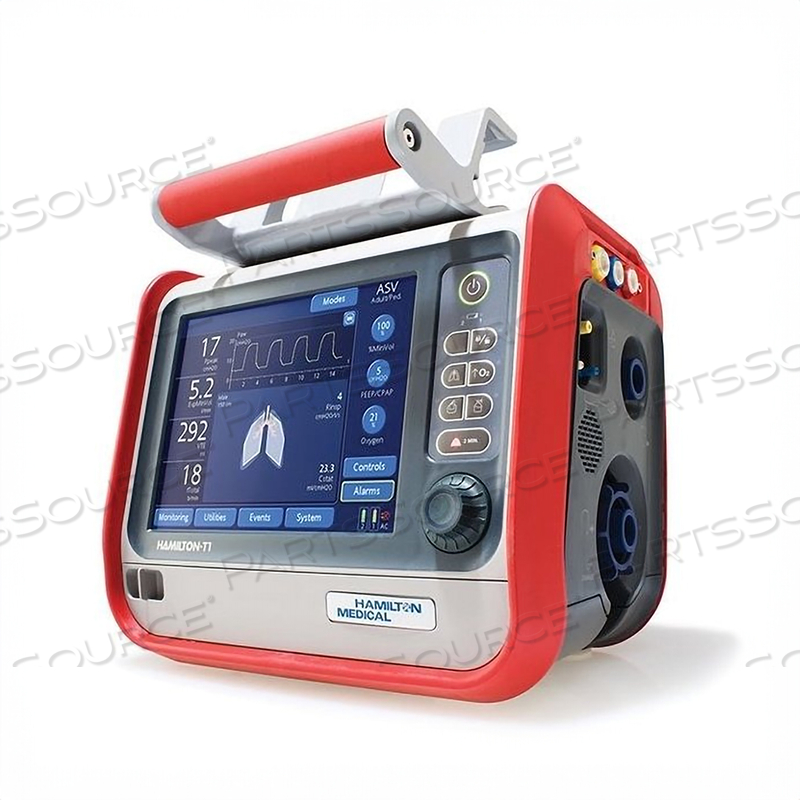
ANNUAL PREVENTATIVE MAINTENANCE (PM) SERVICE FOR HAMILTON T1 VENTILATOR
Hamilton T1 Ventilator
Flate rate includes PM service, kit, and sensor. Additional repairs, if needed, may require added cost approval.
The use of rapid sequence intubation (RSI) in the Emergency Department is often associated with complications, including serious oxygen desaturation. The use of CPAP and/or NIV for preoxygenation may be particularly effective in reducing the risk of hypoxemia during intubation. A recent study from Australia now describes use of the HAMILTON‑T1 to apply a combination of NIV and pressure‑controlled ventilation in high‑risk patients (Grant S, Khan F, Keijzers G, Shirran M, Marneros L. Ventilator-assisted preoxygenation: Protocol for combining non-invasive ventilation and apnoeic oxygenation using a portable ventilator. Emerg Med Australas. 2016;28(1):67-72. doi:10.1111/1742-6723.125241).
The authors' VAPOX technique (ventilator‑assisted preoxygenation) is made possible by the HAMILTON‑T1’s biphasic design and open valve system, which enable the application of NIV for preoxygenation followed by mechanical ventilation after intubation, all with the same breathing circuit.
The use of rapid sequence intubation (RSI) in the Emergency Department is often associated with complications, including serious oxygen desaturation. The use of CPAP and/or NIV for preoxygenation may be particularly effective in reducing the risk of hypoxemia during intubation. A recent study from Australia now describes use of the HAMILTON‑T1 to apply a combination of NIV and pressure‑controlled ventilation in high‑risk patients (Grant S, Khan F, Keijzers G, Shirran M, Marneros L. Ventilator-assisted preoxygenation: Protocol for combining non-invasive ventilation and apnoeic oxygenation using a portable ventilator. Emerg Med Australas. 2016;28(1):67-72. doi:10.1111/1742-6723.125241).
The authors' VAPOX technique (ventilator‑assisted preoxygenation) is made possible by the HAMILTON‑T1’s biphasic design and open valve system, which enable the application of NIV for preoxygenation followed by mechanical ventilation after intubation, all with the same breathing circuit.
The use of rapid sequence intubation (RSI) in the Emergency Department is often associated with complications, including serious oxygen desaturation. The use of CPAP and/or NIV for preoxygenation may be particularly effective in reducing the risk of hypoxemia during intubation. A recent study from Australia now describes use of the HAMILTON‑T1 to apply a combination of NIV and pressure‑controlled ventilation in high‑risk patients (Grant S, Khan F, Keijzers G, Shirran M, Marneros L. Ventilator-assisted preoxygenation: Protocol for combining non-invasive ventilation and apnoeic oxygenation using a portable ventilator. Emerg Med Australas. 2016;28(1):67-72. doi:10.1111/1742-6723.125241).
The authors' VAPOX technique (ventilator‑assisted preoxygenation) is made possible by the HAMILTON‑T1’s biphasic design and open valve system, which enable the application of NIV for preoxygenation followed by mechanical ventilation after intubation, all with the same breathing circuit.
The use of rapid sequence intubation (RSI) in the Emergency Department is often associated with complications, including serious oxygen desaturation. The use of CPAP and/or NIV for preoxygenation may be particularly effective in reducing the risk of hypoxemia during intubation. A recent study from Australia now describes use of the HAMILTON‑T1 to apply a combination of NIV and pressure‑controlled ventilation in high‑risk patients (Grant S, Khan F, Keijzers G, Shirran M, Marneros L. Ventilator-assisted preoxygenation: Protocol for combining non-invasive ventilation and apnoeic oxygenation using a portable ventilator. Emerg Med Australas. 2016;28(1):67-72. doi:10.1111/1742-6723.125241).
The authors' VAPOX technique (ventilator‑assisted preoxygenation) is made possible by the HAMILTON‑T1’s biphasic design and open valve system, which enable the application of NIV for preoxygenation followed by mechanical ventilation after intubation, all with the same breathing circuit.
The use of rapid sequence intubation (RSI) in the Emergency Department is often associated with complications, including serious oxygen desaturation. The use of CPAP and/or NIV for preoxygenation may be particularly effective in reducing the risk of hypoxemia during intubation. A recent study from Australia now describes use of the HAMILTON‑T1 to apply a combination of NIV and pressure‑controlled ventilation in high‑risk patients (Grant S, Khan F, Keijzers G, Shirran M, Marneros L. Ventilator-assisted preoxygenation: Protocol for combining non-invasive ventilation and apnoeic oxygenation using a portable ventilator. Emerg Med Australas. 2016;28(1):67-72. doi:10.1111/1742-6723.125241).
The authors' VAPOX technique (ventilator‑assisted preoxygenation) is made possible by the HAMILTON‑T1’s biphasic design and open valve system, which enable the application of NIV for preoxygenation followed by mechanical ventilation after intubation, all with the same breathing circuit.
The use of rapid sequence intubation (RSI) in the Emergency Department is often associated with complications, including serious oxygen desaturation. The use of CPAP and/or NIV for preoxygenation may be particularly effective in reducing the risk of hypoxemia during intubation. A recent study from Australia now describes use of the HAMILTON‑T1 to apply a combination of NIV and pressure‑controlled ventilation in high‑risk patients (Grant S, Khan F, Keijzers G, Shirran M, Marneros L. Ventilator-assisted preoxygenation: Protocol for combining non-invasive ventilation and apnoeic oxygenation using a portable ventilator. Emerg Med Australas. 2016;28(1):67-72. doi:10.1111/1742-6723.125241).
The authors' VAPOX technique (ventilator‑assisted preoxygenation) is made possible by the HAMILTON‑T1’s biphasic design and open valve system, which enable the application of NIV for preoxygenation followed by mechanical ventilation after intubation, all with the same breathing circuit.